Sleep problems

Sleep during menopause

Poor sleep is the rule during menopause, not the exception. Learn about the hormonal causes behind it and what really helps.
pricing icon
Access to licensed doctors and sleep coaches – for a well-founded assessment of your symptoms
pricing icon
Sleep journal & course content – document symptoms and spot patterns early
pricing icon
Well-founded articles & AI chat – understandable answers to your questions, anytime

At a glance

About 40–60% of women experience sleep problems during peri- and postmenopause. The most common cause: declining progesterone combined with hot flashes and inner restlessness. The most effective non-hormonal treatment is cognitive behavioral therapy for insomnia (CBT-I); hormonally, micronized progesterone – possibly combined with estrogen – can noticeably improve sleep.

Why does menopause disrupt sleep?

Sleep is the most sensitive barometer of hormonal status. During perimenopause, estrogen, progesterone, and melatonin all change at once – each plays a role in good sleep: progesterone has a calming, GABA-like effect, and its decline increases wakefulness and inner restlessness. Estrogen affects melatonin levels and thermoregulation – hot flashes directly interrupt deep sleep. Melatonin also declines with age, shifting the internal clock.

Besides hormonal causes, other factors can further disrupt sleep: restless legs syndrome occurs more often during perimenopause and disrupts falling asleep. Sleep apnea – estrogen normally protects airway muscle tone, so the risk increases noticeably after menopause. Anxiety and rumination activate the brain right as you're trying to fall asleep. Muscle and joint pain can also interrupt sleep.
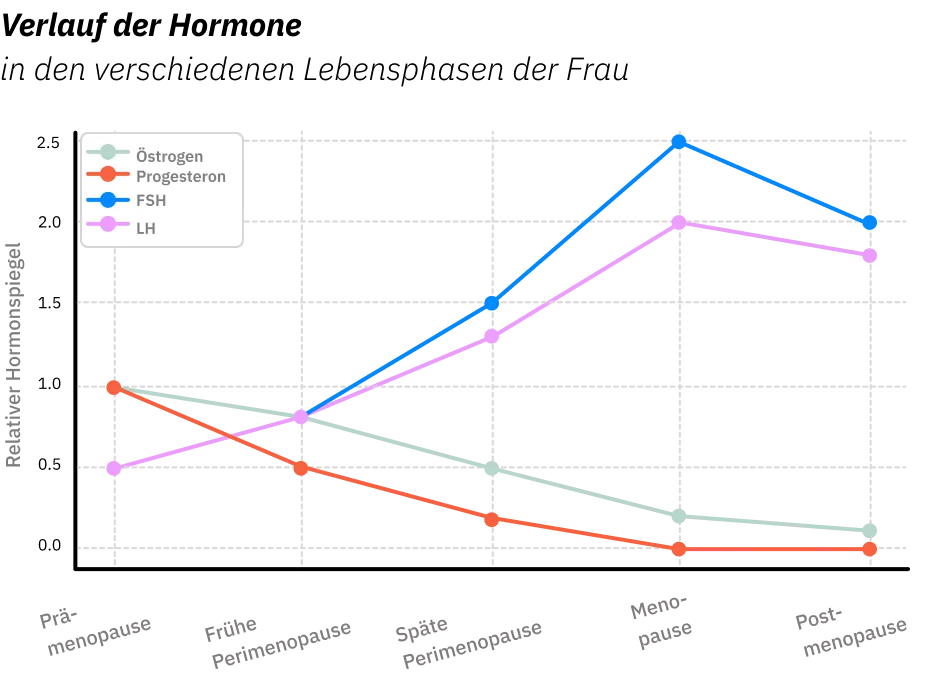
Hormonverlauf: Östrogen, Progesteron, FSH und LH in den Wechseljahren

Hormonal shifts in detail

The chart shows how estrogen, progesterone, FSH, and LH change across menopause. While estrogen and progesterone decline, FSH and LH rise – the body tries to stimulate the ovaries to produce hormones. This hormonal up and down is the basis of many nighttime symptoms: the stronger the fluctuations, the more pronounced sleep problems often are.

Important to know

According to current guidelines, cognitive behavioral therapy for insomnia (CBT-I) is considered the most effective non-hormonal treatment for sleep problems – more effective than sleeping pills and without their side effects.


Good sleep hygiene also helps:
– A cool, dark bedroom (61–66°F) and consistent sleep times
– No screens for 60 minutes before bed
– Extended-release melatonin, 0.5–3 mg, 30–60 minutes before bed
– No alcohol in the evening – it may make falling asleep easier, but disrupts sleep architecture
Herbal support

In addition to sleep hygiene and CBT-I, herbal remedies can help with milder symptoms – but they don't replace treatment of the underlying cause.

Most commonly used:
– Valerian, lemon balm, and passionflower – traditionally calming, mixed study evidence
– Magnesium – supports muscle relaxation, helps with nighttime leg cramps, for example
– Black cohosh – often used for hot flashes and sleep problems
– Micronized progesterone (Utrogest) – binds to GABA receptors, proven to improve sleep onset time and sleep quality; discuss use with your doctor
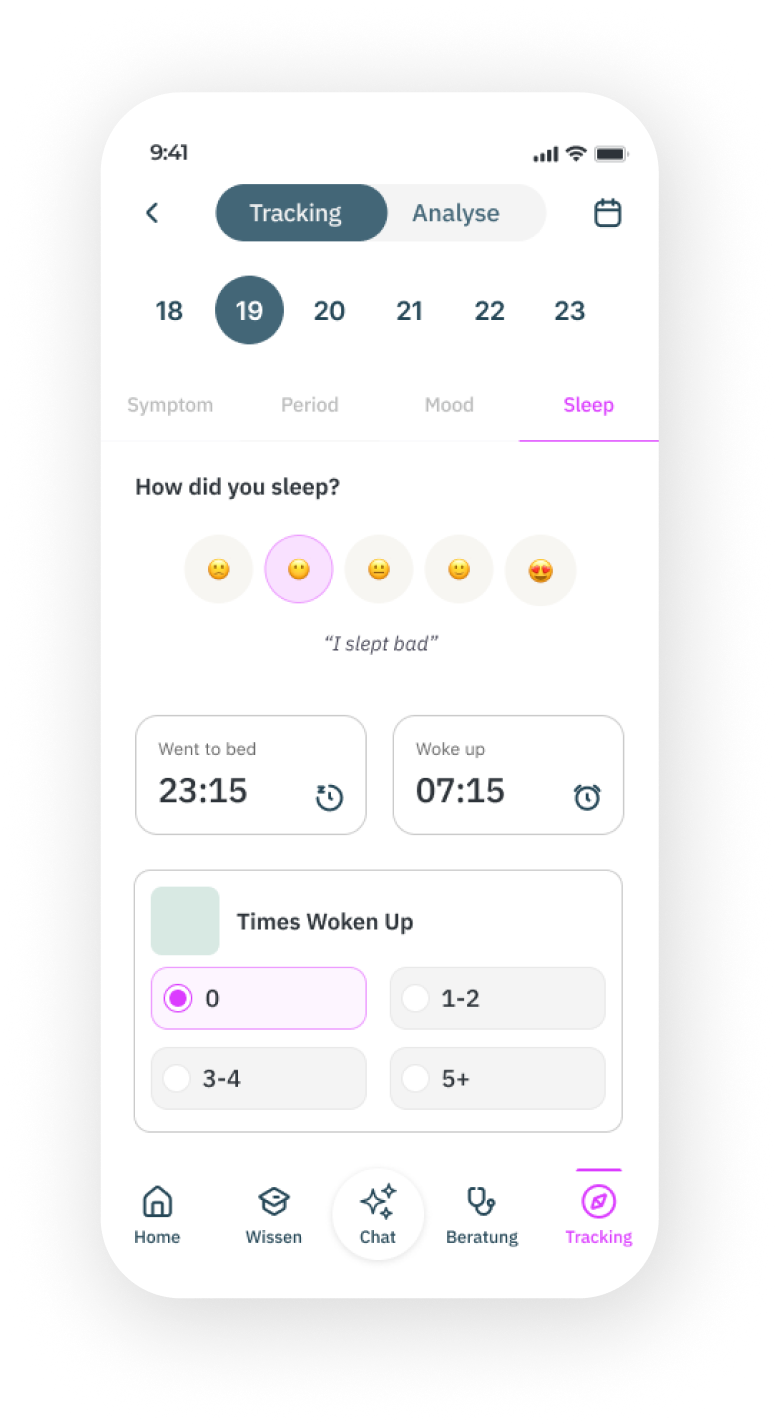
hermaid App: gesunder Schlaf in den Wechseljahren
Pricing

Sleep modules at hermaid

on the topic of sleep

Coming soon

Prevention course: sleep during menopause

Our prevention course on restful sleep during menopause is launching soon – with sleep hygiene, relaxation techniques, and scientifically grounded insights.

pricing icon
Reimbursed by all statutory health insurers
pricing icon
10 weekly units
pricing icon
Sleep tracking and analysis
Care offering for statutory/private insurance

Coming soon

hermaid.SHFT: focus on sleep & hormones

Together with Charité Berlin (Gender Research) and funded by the German Federal Ministry of Education and Research (BMBF), we're studying the relationship between hormonal change, working conditions, and sleep quality in the hermaid.SHFT project.

pricing icon
Employer program
pricing icon
Personalized recommendations
pricing icon
Scientific support
Introductory call
Pricing
The care gap

Articles on sleep

... more in the hermaid app
Die Hermaid App
Our mission – article in Startup Valley about hermaid
hermaid uses AI-powered solutions to support women in menopause individually and effectively.
Die Hermaid App
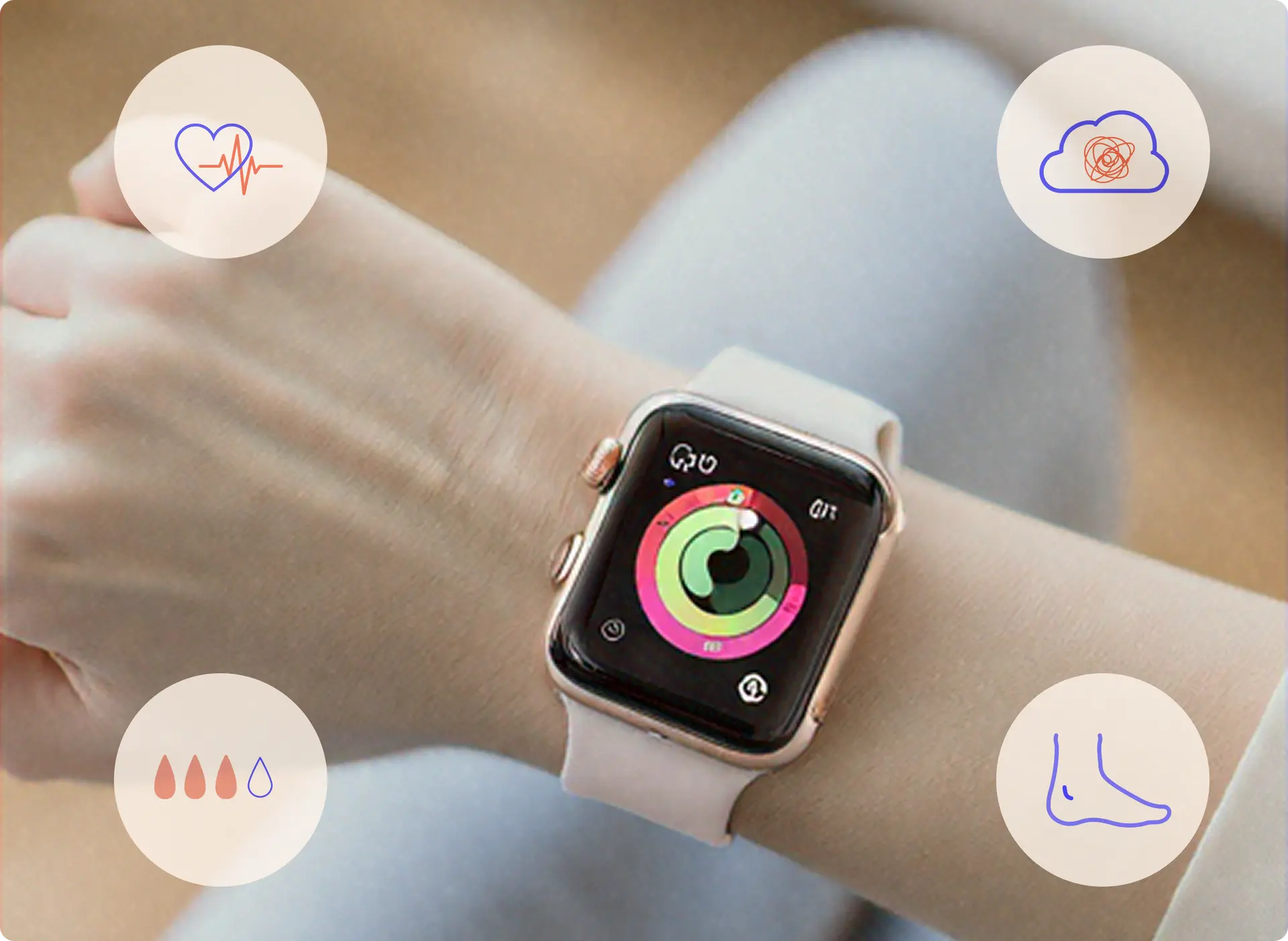
Wearable sleep trackers: a market boom driven by perimenopause sleep problems?
Looks at wearables/sleep trackers as a digital aid – including a critical assessment of what technology can and can't do (no substitute for a sleep lab).
Hermaid Virtueller Assistant - Deine Begleitung in den Wechseljahren
Smart watches & wearables: how tracking can help you understand your health better
Designer Kim explains how tracking sharpens health awareness and helps users build healthy habits digitally.
Questions & answers

Questions and answers about sleep

faq
Why do I suddenly sleep worse during menopause?
Are sleep problems during menopause normal?
How are hot flashes and poor sleep connected?
Could restless legs syndrome or sleep apnea also be the cause?
What helps best against sleep problems during menopause?
Is melatonin useful for sleep problems?
Do herbal remedies help with sleep problems?
How long does it take for measures against sleep problems to work?
How can the hermaid app help me with sleep problems?
What can I do myself for better sleep?
When should I seek medical advice for my sleep problems?
Do sleep problems go away after menopause?
Can hermaid help me find the right support for my sleep problems?
How do sleep problems differ between peri- and postmenopause?
Die hermaid Expertinnen

You don't have to make this decision alone.

Get medically grounded guidance
– without pressure, without overwhelm.