The gender health gap costs.
All of us.
Women spend 25% more of their lives in poor health than men – because around 80% of clinical studies are based on male subjects. The result: delayed diagnoses, ineffective treatments, avoidable costs.


Zertifizierte Digitale Gesundheitsanwendung
.svg)
.svg)

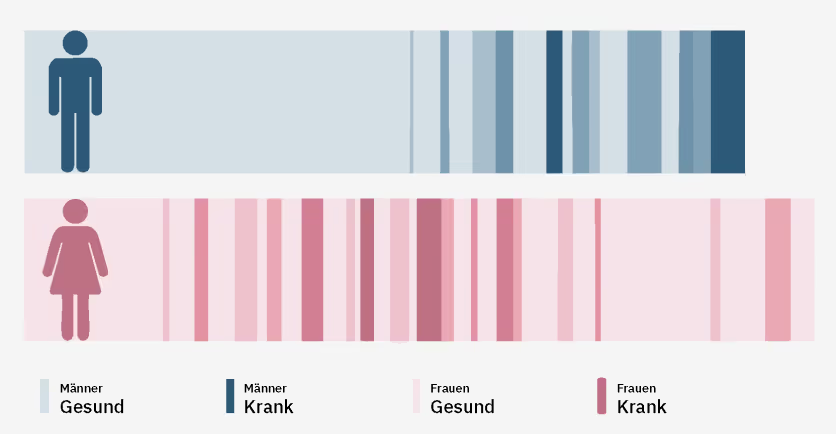
McKinsey Paper: Closing-the-womens-health-gap-a-1-trillion-dollar-opportunity-to-improve-lives-and-economies, chart visualized by wildnorway
The problem in numbers
One trillion dollars. Untapped potential.
Women's health
According to the McKinsey Global Institute, women's global health output could be increased by up to $1 trillion – simply by closing the gender health gap. For insurance systems, that means: under-treatment today becomes a high-cost case tomorrow.
Particularly critical: perimenopause – a decade with a high symptom burden, low diagnosis rates, and a demonstrable impact on long-term cardiovascular, metabolic, and mental health.
Particularly critical: perimenopause – a decade with a high symptom burden, low diagnosis rates, and a demonstrable impact on long-term cardiovascular, metabolic, and mental health.
Men who put off checkups
Early, low-barrier education helps
Men's health
Prevention has a gender problem – just the other way around: only one in five men in Germany goes for regular checkups. The consequences are measurable – about five years shorter life expectancy and significantly more heart attacks and sudden cardiac deaths among men aged 40 to 60. Usually it's not a lack of motivation, but a lack of time, low-barrier offerings, and awareness of one's own risk factors – that's exactly where hermaid comes in.

Research
We're closing the gap exactly where it's biggest

Systematic capture of symptoms that studies have so far barely covered
Evidence-based education instead of dismissing it as a "women's issue"
A data foundation that can help improve gender-sensitive diagnostics – including for AI systems
Perimenopause is the life stage with the greatest unmet research and care need – and at the same time one of the least systematically documented. hermaid closes exactly this gap: through structured symptom documentation that itself becomes robust, gender-sensitive data.
The gender prevention gap
There's a clear gender gap in preventive care too – just with reversed signs: while women go to checkups more often, only about one in five men in Germany uses this offering. The consequences are measurable – men die on average about five years earlier, and cardiovascular disease and sudden cardiac death occur significantly more often in men between 40 and 60. Common reasons include long wait times, fear of a bad diagnosis, or simply too little awareness of one's own risk factors. hermaid wants to close this gap on both sides: with early, low-barrier education – for women in menopause and, starting in 2027, for men in andropause too.
The data gap is real
Where the gap is biggest:
🫀 Heart attack
Women have around a 30% higher mortality risk after acute coronary syndrome than men – because symptoms present atypically and guidelines were developed based on male presentation. Declining estrogen during menopause further measurably increases cardiovascular risk.
🧠 Migraine
Women are affected 2 to 3 times more often, frequently triggered by the drop in estrogen before menstruation or during perimenopause. Yet migraine is often dismissed as a "women's issue" and treated according to guidelines less often.
💊 Medication dosing
At the same dose, women experience more side effects on average – because the liver and kidneys work differently. Many common painkillers stay in the female body longer. Dosing studies rarely analyze this by sex.
⚡ Autoimmune diseases
Menopause has a demonstrable effect on the course of multiple sclerosis (MS). At the same time, out of caution about possible pregnancy, women often receive the most effective therapies later – even without concrete plans to have children.
🤖 AI in diagnostics
Training data for medical AI systems is predominantly based on male patient data. As a result, even new technology can overlook women's atypical heart attack symptoms – the data gap perpetuates itself instead of closing.
🩹 Research on gender-specific differences
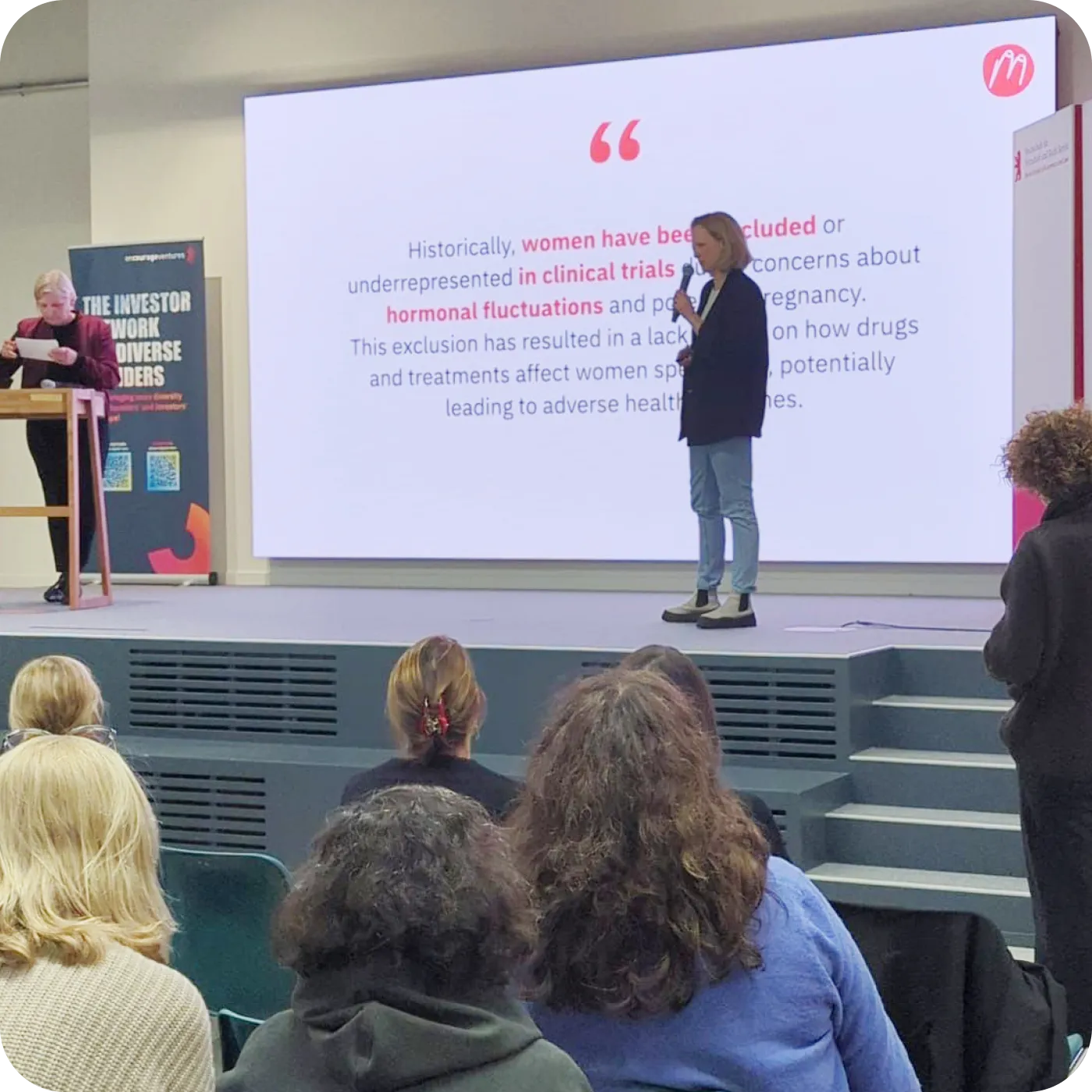
Medical research still too rarely accounts for gender-specific differences – from symptom presentation to diagnostic criteria to medication dosing. As a result, neither women nor men always receive the care that's right for them. hermaid helps close this gap by collecting structured symptom data that makes gender-sensitive differences visible.
Research
Scientific collaborations with impact
Partner: Charité Berlin
CE-certified Class I medical device (MDR 2017/745)
No employer access to individual health data
hermaid is working with the Gender Research Department at Charité Berlin on the hermaid.SHFT study – a scientific investigation into the relationship between hormonal change, working conditions, and sleep quality. The goal is to derive concrete, evidence-based recommendations for companies and users. The study includes both women and men.

Request a research collaboration or insurance partnership
We welcome the exchange with health insurers, research institutions, and public health stakeholders.
Get our newsletter and stay informed
Our fellowships / nominations












.svg)
.svg)