Use cases
Prevention instead of reaction – the "gender health" business case
On this page, we show in detail the six areas where early intervention from age 40+ makes the biggest difference – for men and for women.
.svg)
Early detection through structured symptom documentation
Care management through data-driven triage
Research access to a cohort that has barely been studied so far
Prevention programs as a reimbursable add-on

The care gap
What goes untreated escalates
Each field represents concrete downstream costs that can demonstrably be reduced through early education and support – for men and for women.
Bone health
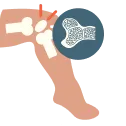
Estrogen supports bone formation and slows the natural breakdown of bone substance. As hormone production declines, bone loss often accelerates unnoticed over years – with a rising fracture risk and corresponding downstream costs. hermaid educates early and so reduces the risk of costly long-term consequences.
Cardiovascular health
As long as estrogen levels are high, they protect blood vessels. After menopause, the risk of heart attack and stroke rises noticeably – with significant downstream care costs. hermaid provides information on this crucial window for preventive measures, before costly acute treatment becomes necessary.
Metabolism & diabetes risk
Hormonal change affects how the body processes sugar and fat. The risk of type 2 diabetes can increase, while symptoms are often mistakenly attributed to other causes – delaying treatment. hermaid helps detect changes early and avoid costly downstream conditions.

Gut health
Female hormones appear to protect the gut lining. As they decline, the risk profile here changes too. Early education helps ensure preventive screenings aren't missed and helps avoid serious, costly diagnoses.

Cognitive health
Whether and how hormonal change affects memory and concentration is being intensively researched. The timing of a possible hormone therapy appears to play a role. hermaid makes relevant research accessible – a contribution toward reducing long-term care costs.
Lung function
The lungs are affected by hormonal change too – studies show a faster decline in lung function during menopause, independent of factors like smoking. hermaid raises awareness of this little-known connection, which is rarely considered in care today.
The care gap
Articles in the hermaid app
In the hermaid app you can filter and search all articles by topic – and use our AI chat directly for questions. It references your profile but is 100% GDPR-compliant.
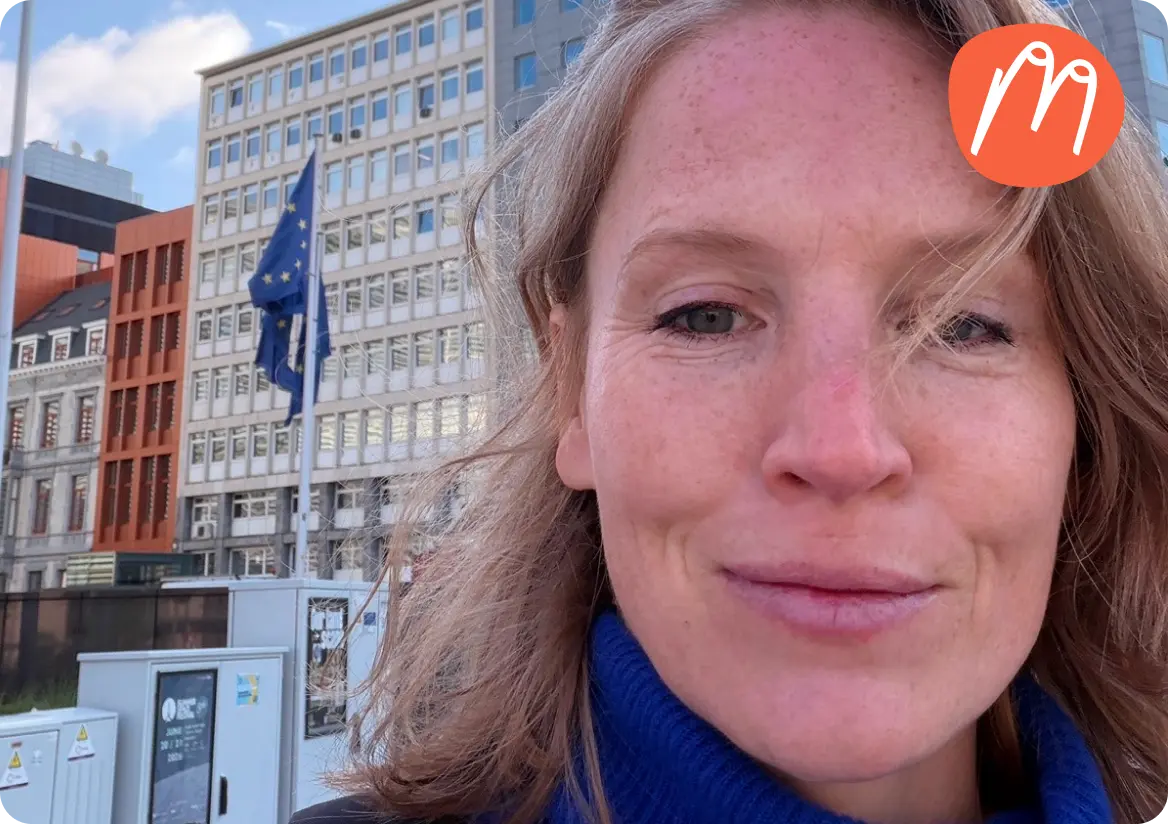
Why women are invisible in prevention
Millions of euros flow into prevention that never reaches women. A conversation about the German healthcare system, and why women aged 40–60 remain invisible within it.
.svg)

Men's health in midlife
Men also experience hormonal changes in midlife, such as declining testosterone. hermaid makes gender health visible – for women and men alike.
Cost Reimbursement
Can you actively request hermaid from your health insurer?
Yes – with our ready-made templates you can submit a reimbursement request yourself or ask your doctor for a recommendation letter.
Go to templates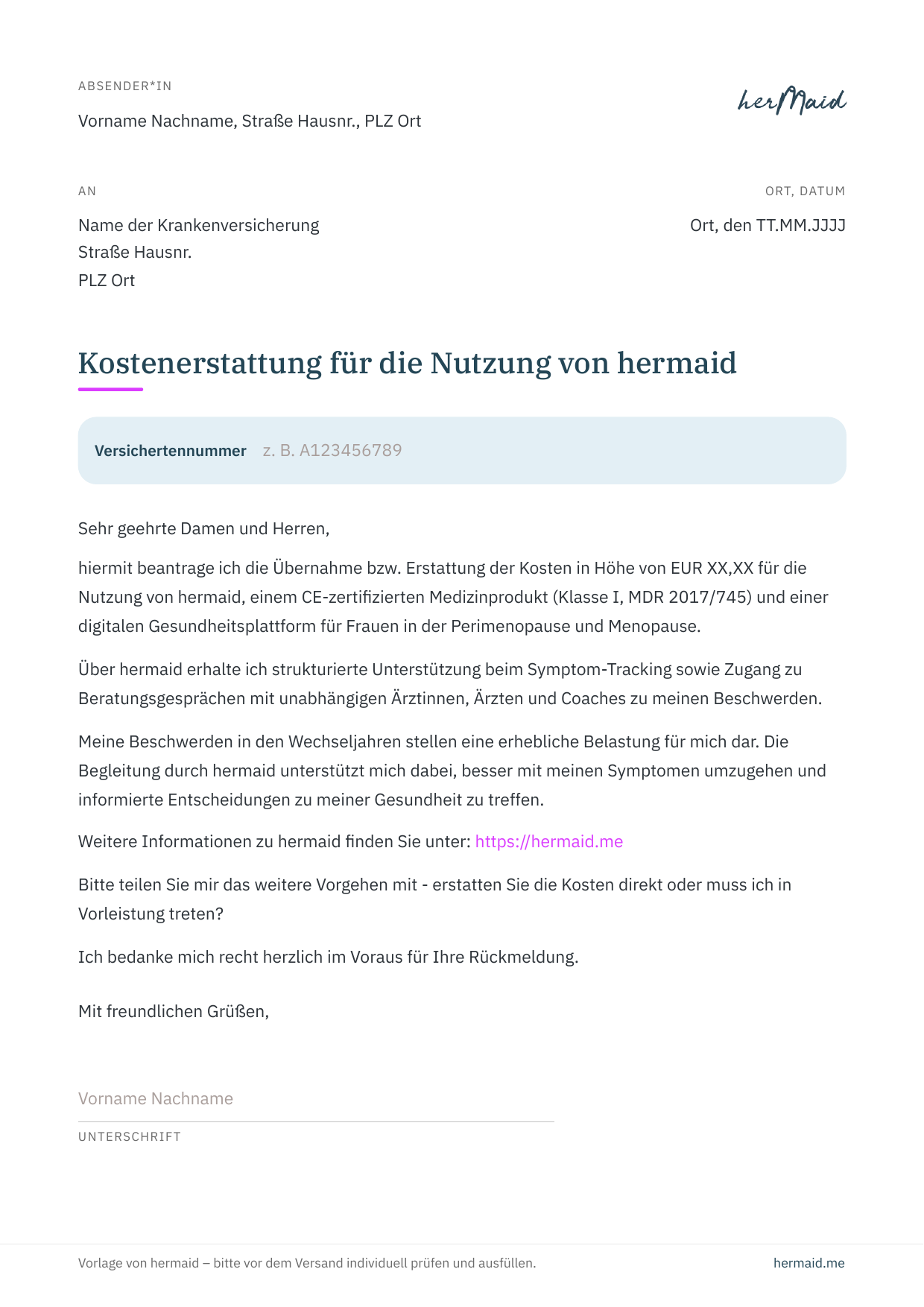

CE-certified
Approved as a Class I medical device in the EU
GDPR-compliant
Your health data is stored encrypted and processed to the highest data protection standards.
Evidence-based
Developed with gynecologists and psychologists, medically reviewed by our medical director

Bereit für Klarheit in den Wechseljahren?
Jetzt App runterladen.
Viele Funktionen in der App sind und bleiben kostenlos.
.svg)
.svg)

.svg)
.svg)